The Man Behind the Music
Built in Alabama. Proven Around the World. Building What Comes Next.
Brandon Lee Hughes was not supposed to make it out.
By fifteen he had been certified as an adult and sentenced to nine years in the Alabama Department of Corrections. By twenty-five he had signed a seven-year major-label recording agreement, contributed music to an HBO miniseries, and stood inside the machinery of an industry that had no reason to know his name.
Neither of those facts explains him. What sits between them does.
Known professionally as King 6Tre, earlier as 6 Tre G, and at the beginning of his career as The Unknown, he is a recording artist, songwriter, producer, audio engineer, filmmaker, technology developer, fashion designer, entrepreneur, philanthropist, and creative executive. He has sold millions of records, performed across the United States and in more than twenty countries, developed artists who went on to national careers, and built companies across music, film, technology, construction, fashion, and healthcare.
He also learned — early, and expensively — that talent does not equal control. A corporation can merge. A division can close. A career built on someone else's platform can end in a meeting the artist is not invited to.
That lesson became a philosophy, and the philosophy became infrastructure.
Today Brandon owns his masters, his platform, his archive, his brands, and his customer relationships. Through Innovation Society he is assembling a connected ecosystem where music feeds film, film expands fashion, technology powers distribution, and construction builds the physical spaces the rest of it needs. Through Hughes Technologies he is building Michael AI, an intelligence platform designed around verification rather than confidence. Through the iAm Foundation he is building the intervention nobody offered him.
Because the real question underneath all of it has never changed.
What would have happened if somebody had taken him to a recording studio instead of sending him to a youth prison?
That answer is gone. The next child's answer is not.
The Man Behind the Names
One Man. Four Eras.Brandon Lee Hughes has recorded under three professional identities. They are not characters, alter egos, or marketing exercises. They are timestamps.
Brandon Lee Hughes is the legal name, the personal name, and the name on the businesses. It is the name of the contractor, the founder, the father, the student, and the man who signs the documents. When the story is about ownership, structure, or family, it is Brandon Hughes.
The Unknown was the beginning. It is the name he carried out of prison and into Houston, into the first studio sessions of his professional life, and onto a seven-year agreement through JD Entertainment and Warner Bros. Records. The name was accurate. Nobody knew him. He had spent his formative years inside institutions, he had more than a thousand songs and no audience, and the industry had no file on him. The Unknown was not a persona. It was a description.
6 Tre G was the independent era. It belongs to Dark House Music Group, to Cotton Rowe, to backpacks full of CDs and trunk sales on strips in cities he had no relationships in yet. It belongs to the years when he stopped waiting for a corporation to decide his direction and started building an audience by hand, one conversation and one disc at a time. If The Unknown was what the industry called him, 6 Tre G was what he built when the industry stopped calling.
King 6Tre is the present. It is the name that carries the label, the catalog, the film slate, the technology company, the fashion houses, and the foundation. The promotion in the name is not vanity. It marks the point where he stopped being an artist inside somebody else's system and became the system.
What connects the four is not branding. It is continuity of purpose.
The same person who memorized one record in Fayette because it was the only record he owned is the person who built a triple-platinum single around that memory. The same person who wrote songs on a prison yard to survive the day is the person who now designs archives so that nobody else's history gets erased. The same person who lost a major-label deal to a corporate merger is the person who now owns every master he records.
The names changed as he did. The reason never did.
Explore The Vault →Built in Alabama
Before the Deals, There Was a Record and a Rhyme.Brandon spent much of his childhood in Fayette, Alabama, after being adopted during a period of racial tension in Birmingham.
The separation from his biological mother created wounds he was far too young to name. He carried displacement before he had a word for it. He carried identity questions before he understood they were questions. He carried anger, and the anger showed up as behavior, and the behavior was the only part anyone could see.
At the same time, the family he was adopted into handed him the first tools he would ever use to explain himself.
His sister taught him to play piano. His mother — a poetry and arts teacher — recognized the imagination underneath the trouble and pushed him toward it instead of away from it. While he was in the second grade, she suggested he write something using rhyme for a creative-writing contest.
That assignment woke something up.
Not long after, his cousins brought him a record by Doug E. Fresh and Slick Rick. It became the only record he owned, and he studied it the way other children study a language. Every word. Every pause. Every joke. Every shift in vocal inflection. He did not listen to it. He absorbed it.
"I learned 'La Di Da Di' because it was the only record I had. When I came home from school, I played that. It got to the point where I knew it so well that I would just play the instrumental and say the words."
He had no idea that record would eventually become part of the biggest commercial success of his career. He only knew that something inside it was speaking directly to him.
The rhythm gave structure to thoughts that had none. The rhymes gave him language for emotions he could not otherwise explain. And Slick Rick and Doug E. Fresh showed him something that would define the next thirty years of his life: a voice can be an instrument, and an ordinary experience, told correctly, becomes unforgettable.
Music was already becoming his outlet. It was already working. It was already the intervention. It simply was not the intervention the system offered him.
That distinction matters more than any other fact in this biography. The talent did not arrive after the incarceration. It did not emerge because of it. It was there in the second grade, in a poetry teacher's classroom, in a boy playing an instrumental and reciting a record he had memorized because it was the only one he had.
Everything that followed — the deals, the awards, the companies, the campus being planned in Huntsville — traces back to the fact that a gift was visible in a child, and the institutions that took custody of that child were not built to see it.
See the full family legacy →The Child the System Failed
They Called It Rehabilitation.Brandon entered Alabama's juvenile justice system at approximately eleven years old.
For several years he moved through group homes, detention centers, and Department of Youth Services facilities. On paper, these were places where troubled children were redirected. Rehabilitated. Counseled. Prepared to return to society as something better than they arrived.
That is not what happened.
Children with completely different backgrounds, traumas, classifications, and levels of criminal involvement were routinely housed together. A child who had committed a minor offense lived alongside children whose experience already included gangs, drug distribution, theft, burglary, robbery, carjacking, assault, and murder.
Instead of being protected from destructive influence, many children were introduced to it.
Staff members were nominally counselors and mentors. In practice, most of their hours went to enforcing rules, breaking up fights, controlling contraband, and managing environments that held more young people than they were designed to hold. There was rarely time to ask a child what had happened to him. There was only time to respond to what he did.
So the system never reached the pain underneath Brandon's behavior. It only ever responded to the behavior.
By fifteen, he had been certified as an adult and sentenced to nine years in the Alabama Department of Corrections. He ultimately served more than seven.
And inside the adult system, he found the same faces. The boys he had met in juvenile facilities were there. Some had arrived before him. Some arrived after. The pipeline was not theoretical, and it was not a statistic in a policy paper. It was a room full of people he already knew.
The message was impossible to misread. The juvenile system had not reformed them. It had prepared them.
That understanding never left him. It became the foundation of a conviction he still holds and still says out loud: most troubled children are not born criminals. They are wounded, displaced, angry, ignored, and misunderstood — and then placed in environments that hand them an education in exactly the behavior everyone claims to be preventing.
Brandon had a gift the entire time. He had it at eleven. He had it at fifteen. He had it in every facility he was moved through. Nobody in a position to act on it ever identified it, because identifying it was not what those institutions were built to do.
Years later, after the record deals and the awards and the companies, he still returns to the same question:
What would have happened if somebody had taken me to a recording studio instead of sending me to a youth prison?
He will never know. That version of his life is gone, and no amount of success recovers it.
But that question is the reason the iAm Foundation exists. It is the reason for the campus being built in Huntsville. It is the reason the companies in this biography are structured to teach, train, employ, and mentor rather than simply to earn.
The answer for Brandon is unavailable. The answer for the next child is not.
Read about the iAm Foundation →More Than 1,000 Songs
The Catalog Came Before the Contract.Prison did not destroy Brandon's creativity. It sharpened it into a weapon.
He wrote constantly. Songs became escape, discipline, emotional release, and — most importantly — evidence that a future existed on the other side of the wall. Writing was the one activity in that environment that produced something the environment could not take.
By the time he was released, he had written more than a thousand songs.
He also built a serious reputation as a battle rapper on the yard, and that is where the technical education happened. The competition was not regional. He went up against rappers from New York, from the West Coast, from Jamaica, from Alabama, and from across the South. Every one of them arrived with a different rhythmic language.
So he learned all of them.
He studied accents. Cadences. Slang. Timing. Cultural reference. The way a New York rapper attacks the pocket versus the way a West Coast rapper rides behind it. He learned to change his delivery without losing his identity — which is a far harder skill than changing his delivery at all.
"I was in the penitentiary with New York rappers, West Coast rappers, and Jamaican rappers. I can speak patois and spit that. I'll challenge anyone in the game because I'm not confined to one thing. I'm not South, East Coast, or West Coast."
That versatility became a defining quality of his entire career.
King 6Tre is unquestionably Southern. He has never sanded the Alabama off. But he has also never let geography or genre draw a boundary around what he is allowed to make. He moves from street records to storytelling, from country to rock, from gospel to alternative, from a console to a stage, because his foundation was built through adaptation rather than imitation.
Understand what this means chronologically. The catalog existed before the contract. The technical range existed before the studio. The artistic identity was fully formed before a single industry professional had heard his name.
He did not leave prison hoping to become an artist. He left prison already being one.
From Prison to Warner Bros.
Talent Is Not Control.Brandon came home with hundreds of finished songs and a level of hunger no studio can manufacture.
Within roughly ninety days of release, he had a management agreement and a plane ticket. He was sent to Houston, Texas, to begin recording his first album.
Seven months later, performing as The Unknown, he signed a seven-year recording agreement through JD Entertainment and Warner Bros. Records. The deal was facilitated by music executive Allison Ball Gabriel and carried a reported value of more than eleven million dollars.
Sit with the timeline. A young man the State of Alabama had classified as an adult offender at fifteen was a major-label recording artist before he had been free for a full year.
The momentum continued. In 2001 he was recognized with an Emmy for his musical contributions to the theme music of HBO's six-part miniseries The Corner, produced by Charles S. Dutton — establishing him as the first rap artist to receive a major television award for a musical contribution of that kind.
At twenty-five, every barrier that had been placed in front of him appeared to be behind him.
Then the business moved, and it moved without him.
The AOL and Time Warner merger triggered audits, restructuring, and strategic realignment across Warner-owned assets. Warner Bros. Records was among the companies affected. Rosters were reviewed. Priorities shifted. Brandon was ultimately released from the label.
Nothing had happened to his talent. Nothing had happened to the music. A corporation had simply changed direction, and he had been standing on the part of the floor that moved.
That is the lesson, and it is the hinge this entire biography turns on:
A company can merge. Leadership can be replaced. A division can be dissolved. An artist can spend years building something real and watch its future decided in a room he will never enter, by people who have never heard the record.
Most artists learn a softer version of this lesson and respond by chasing the next deal. Brandon responded by asking a different question: what would it take to never be in that room's mercy again?
The answer took two decades to build, and it is the reason for Dark House Music Group, Mazerati Records, King6Tre.com, The Vault, Hughes Technologies, and every other entity in this story.
He did not become obsessed with ownership because it was fashionable. He became obsessed with ownership because he had already lost without it.
Dark House Music Group and Cotton Rowe
The Independent Blueprint.After roughly three years in Atlanta, Brandon returned to Huntsville, Alabama — to raise his son, build a family, and start over on terms he set himself.
He did not go looking for another corporation to decide his future.
He founded Dark House Music Group and began building a movement out of the things he could actually control: direct promotion, artist development, studio work, regional relationships, and street-level entrepreneurship. Nothing borrowed. Nothing licensed. Nothing waiting on approval.
Out of that period came the regionally legendary group Cotton Rowe: Kodiene (Deaundray Stowe), Kush (Chad Fluker), Los (Carlos Zavala), and Do Wrong (Billy Harris).
Over six years, Cotton Rowe released more than nine compilation mixtapes.
It is worth being precise about what that required, because the current generation has no reference point for it. This was before streaming made distribution a formality. There was no algorithm pushing the music. No playlist editor deciding what an audience would hear. No social campaign capable of reaching a million people from a phone. Every listener was earned in person.
"We literally hit the block and sold them out of the trunk. Everybody had a backpack full of CDs. My homeboy Kali was the cameraman. All we did was hit the strip in whatever city we went to, getting at the chicks, slanging and selling records at the same time."
Kali documented the movement on camera while the group sold it hand to hand, city by city, strip by strip.
Those years taught Brandon something he has never let go of: an artist who knows his audience personally and controls his product outright holds a form of power that borrowed access can never replicate. A label can give you reach. Only direct relationship gives you a business.
He was practicing that long before independent ownership became a slogan in hip-hop.
On the comparison people will make. Some listeners recognize a resemblance between Brandon's model and the approach Nipsey Hussle later became nationally known for — independent music, direct sales, fashion, technology, community investment, and businesses built to feed one another.
The comparison is understandable. But Brandon was not following Nipsey Hussle's blueprint. He had already begun building his own.
Years before that model became a national symbol, Brandon was selling records out of trunks in Alabama, developing artists, running studio sessions, forming companies, and trying to solve the same structural problem he is still solving now: the South produces enormous talent and almost no infrastructure to hold it.
Two men arrived at the same conclusion from different states. That is not imitation. That is what happens when the problem is real.
Dark House was where Brandon proved to himself that he could build without permission. Everything since has been the same lesson at a larger scale.
Developing Yelawolf
Alabama Talent, Recognized Early.Through Dark House Music Group, King 6Tre became an early force in the development of fellow Alabama artist Yelawolf.
He provided one of Yelawolf's earliest official recording opportunities and personally recorded, mixed, and mastered early material — including "Pissin' in a Barrel of Bees."
Yelawolf would later move through Columbia Records, Interscope Records, Eminem's Shady Records, and eventually his own Slumerican movement. Brandon's involvement came earlier than any of that, during the foundational stretch when the sound, the direction, the image, and the artistic identity were still being figured out.
He does not claim to have built Yelawolf's career. Yelawolf built Yelawolf's career.
What Brandon did was recognize what was there, at a moment when very little of the wider industry was looking at Alabama at all, and give it a professional room to happen in.
That is a specific skill, and it turned out to be one of his most natural gifts.
Artist development requires more than taste. Brandon had been a performer, a songwriter, a producer, an engineer, and a major-label signee, which meant he could see the whole picture at once — the record, the performance, the person, and the business decision underneath all three.
He could hear when a record was wrong. He could hear when a performance was dishonest. He could recognize when an artist had genuine talent and no direction, which is the most common and most expensive problem in music.
He also understood something about his home state that took the industry another decade to catch up to: Alabama has never lacked gifted artists. What Alabama lacked was infrastructure. Investment. Professional development. Studios that knew what they were doing. And people with enough experience to move a talented kid from potential to a sustainable career without losing him in between.
That understanding is the direct ancestor of Mazerati Records, The Dream Faktory, Innovation Society, and the iAm Foundation.
Brandon did not decide to build institutions because it sounded impressive. He decided to build them because he kept meeting people who needed one and finding that none existed.
The Story of "Fresh"
The Record That Came Full Circle.The breakthrough that defined King 6Tre's next era began with a memory from the second grade.
Former Jive Records marketing executive Julia Kadarusman heard a record he had created and moved quickly, signing him to her Moonstone Records imprint, distributed through Battery Records and Jive Records.
That record was "Fresh."
It was created in Athens, Alabama, with producer and beatmaker Ken P — one of the earliest defining collaborations between the two men as the production team known as The Trunk Bangers.
Here is where the story closes a loop that had been open for more than twenty years.
The moment Ken started laying the foundation of the beat, King 6Tre heard the Slick Rick vocal that had lived in his head since childhood. Not as a reference. Not as research. As memory. The record he had memorized in Fayette because it was the only record he owned surfaced instantly, because it had never actually left.
He entered the process immediately. Ken P took the production and built it out with an instinct and an energy that told both men something was different about this one before it was finished.
They knew. "Fresh" was not going to sound like anything else on the radio.
Released nationally through the Sony, Jive, Battery, Moonstone, and Mazerati Records network, it became an international hit.
Figures as documented in the master biography; a single reconciled set of numbers (RIAA certification + current stream count) is being locked for consistency across the site, press kit, and streaming platform bios.
The achievement established King 6Tre as the first urban artist from Alabama to reach that combination of landmarks.
But the chart data is the least interesting part of this chapter.
A child in Fayette, Alabama — displaced, adopted, angry, and years away from the institutions that would take custody of him — owned exactly one record. He played it until he could recite it over the instrumental. It was the only piece of the wider world he had unrestricted access to.
Three decades later, that same influence became the creative foundation of a triple-platinum international single, made in Alabama, by a man the state had once sentenced as an adult at fifteen.
Nothing about that was planned. That is precisely what makes it true.
Seventeen years after the record's rise, King 6Tre and Ken P prepared to receive the plaques that permanently document what the two of them did together in Athens.
The achievement belongs to both of them, and Brandon has never told the story any other way.
Ken P made the beat. King 6Tre turned a childhood memory into a record that traveled the world.
"Can't nobody take that away from us. We did it."
That sentence carries more than pride. It carries the entire ownership philosophy in eleven words. A label can drop you. A merger can restructure you. A corporation can decide your priority level in a meeting you never hear about.
But the record exists. The certification exists. The plaque exists. That one, nobody gets to take.
See the full release details, credits & artwork on the Music page →The Artist Beyond "Fresh"
One Record Was Never the Career."Fresh" is the most widely recognized single King 6Tre has released. It has never been the boundary of his work.
His catalog spans nearly two decades of officially released material and a considerably larger archive of unreleased music.
Released work includes Boss Muzik Vol. 1, Boss Muzik: The Filthy Edition, El Trapo, Marlon Bando, and Nuclear Winter.
The next chapter of the catalog includes Don Mazerati, Hurricane Brandon: Category 6, Boss Muzik Vol. 2, Juug Knight, Under Siege, Granddaddy Purp, and Chevy World: The Movie — Original Motion Picture Soundtrack.
Behind those titles sits an archive holding roughly thirteen albums' worth of unreleased music — a running document of different eras of his life, his artistry, his businesses, his relationships, his victories, his failures, his humor, and his evolution as a person.
Most artists lose material like that. It sits on dead hard drives, in defunct studios, or in the possession of people who stopped answering the phone years ago. Brandon kept his, which is why the release strategy on King6Tre.com is as much excavation as it is promotion.
His sound refuses to sit inside one genre. Rap is the foundation and always will be, but the creative identity reaches into rock, country, gospel, bluegrass, alternative, R&B, cinematic composition, and Southern storytelling — often inside the same project.
That is not indecision. It is the direct product of a musical education built on adaptation: a piano-playing sister, a poetry teacher, a memorized Slick Rick record, a prison yard full of rappers from five different regions, and twenty-five years behind a console working across every genre Nashville and the South produce.
King 6Tre does not make records to match what is currently working. He makes them on instinct, from lived experience, without asking anyone what category they belong in.
Explore the full discography →Producer, Engineer and Multi-Instrumentalist
Behind the Glass.The public met Brandon Hughes as the artist behind "Fresh." The industry met him somewhere else entirely — in the room where the record actually gets made.
He is a producer, recording engineer, mixing engineer, mastering engineer, songwriter, composer, studio director, artist developer, and multi-instrumentalist with more than twenty-five years of professional experience.
His working instruments and disciplines include vocals, piano, guitar, saxophone, digital audio production, songwriting, arrangement, engineering, and artist development. That combination is rarer than it sounds. Plenty of producers can hear a problem. Fewer can play the fix, engineer the fix, and then explain to the artist why the fix was necessary without breaking the performance.
From 2005 to 2007 he served as studio director and chief engineer at Stargate Studio in Huntsville, Alabama. Working on Pro Tools HD systems, he ran recording operations and built an internship program that created real opportunities for developing engineers — the first instance in this story of Brandon turning a facility he controlled into a training environment, which is a pattern that ends up defining the iAm Campus twenty years later.
His career has placed him in recording environments involving artists including Usher, P!nk, Katy Perry, Justin Timberlake, Kelly Clarkson, Rascal Flatts, Bo Bice, Tim McGraw, Faith Hill, Young Buck, Trae tha Truth, Jackie Chain, Bun B, Yo Gotti, Lil Boosie, and Z-Ro.
At Nashville's legendary Quad Studios on Music Row, he brought his recording, mixing, mastering, production, and artist-development work to projects spanning country, gospel, bluegrass, and popular music.
His work on Ricky Skaggs and The Whites' Salt of the Earth contributed to the album's Grammy victory at the 50th Annual Grammy Awards. His work has also been recognized through the Gospel Music Association's Dove Awards.
He additionally contributed to the development of bluegrass artist Billy Droze, who went on to significant recognition within country and bluegrass music.
Consider what that résumé actually describes. A man who learned to rap on a prison yard competing against New York, West Coast, and Jamaican inmates went on to engineer bluegrass on Music Row and contribute to gospel projects recognized by the Dove Awards. There is no clean industry category for that. There was never going to be.
Whether he is behind the microphone or behind the console, the philosophy does not change:
That last line is not a sentiment. It is a working standard, and it reappears — almost word for word, in a completely different industry — when he starts building artificial intelligence twenty years later.
Mazerati Records
The Fight for Ownership.
Everything Brandon learned at Warner Bros. is built into Mazerati Records.
He had already watched success evaporate for reasons that had nothing to do with the music — a merger, an audit, a restructuring, a change in corporate priority. The conclusion he drew was not that major labels are the enemy. The conclusion was narrower and more useful: success without ownership is temporary by design.
As founder and CEO, King 6Tre has built Mazerati Records into considerably more than an imprint for his own releases. It is being developed as an independent entertainment, intellectual-property, artist-development, licensing, merchandising, and distribution company.
What Mazerati controls: the recordings, the masters, the credits, the artwork, the visual history, the merchandise, the licensing, the audience relationship, and the future of the catalog.
That list is not aspirational language. Each item on it represents a specific way artists lose their work — and Brandon can name the mechanism for every one, because he has either experienced it or watched it happen to someone he developed.
Masters get retained. Credits get miscounted. Artwork gets replaced by whoever handles the reissue. Visual history disappears when a photographer's hard drive dies. Licensing gets negotiated by people whose incentives are not yours. And the audience relationship — the single most valuable asset an artist owns — gets rented back to the artist by whatever platform currently sits between them.
Mazerati exists to close those gaps.
Part of that work is forward-facing: new releases, developing artists, soundtracks including Chevy World: The Movie, merchandising, and independent distribution direct to the people who actually listen.
The other part is restoration. Older projects are being reintroduced with corrected credits, restored cover art, finalized audio, and accurate track information — presented at the same standard as a new release, because a catalog that is documented badly is a catalog that will eventually be documented by somebody else.
The mission is not to reject every major company or traditional platform. Partnerships are useful. Distribution is useful. Reach is useful.
The mission is to make sure outside relationships stay partnerships, rather than ownership arrangements wearing the language of opportunity.
King 6Tre has already lived the alternative.
King6Tre.com
The Independent Distribution Network.King6Tre.com is not an artist website with a store attached.
It is being built as the consumer-facing foundation of an independent distribution network for Mazerati Records and Brandon Hughes's expanding catalog of intellectual property and products.
The platform brings music, streaming, merchandise, video, historical photography, future film releases, and direct purchasing together under one roof that nobody else owns.
What visitors can do here: buy complete projects or individual tracks directly, subscribe for full-catalog streaming, watch the video library, access official merchandise, and follow new releases without depending entirely on outside streaming or retail platforms.
The economics are the point. The system is being developed around a single principle:
Rather than operating underneath a stack of recurring software subscriptions — where third-party services take a fixed cut whether the artist sells anything or not, and own the customer relationship regardless — King6Tre.com is designed to run on direct sales and percentage-based transactions. Costs scale with revenue instead of arriving monthly whether revenue does or not.
That structure is a direct response to a problem Brandon watched destroy independent artists for two decades: the tooling ate the margin, and the platforms kept the audience.
The site is also the definitive home of the restored catalog. Older projects are being reintroduced with restored cover art, corrected credits, finalized audio, and updated track information, presented at the same level as any new release.
King6Tre.com is not only promoting what comes next. It is protecting what came before.
The Vault
1999 to Now.At the center of King6Tre.com is The Vault — a living photographic archive documenting Brandon's journey from 1999 to the present.
It preserves every era: Brandon Hughes, The Unknown, 6 Tre G, and King 6Tre.
Recording sessions. Label years. Photoshoots. Performances. Street campaigns. Business ventures. Independent releases. Personal transformation. The moments that shaped a life, in the order they happened, without anyone else deciding which ones mattered.
The Vault is not a gallery. It is a historical record, and it exists because of a specific failure Brandon has watched repeatedly.
Artists lose control of their images. Their credits get recorded wrong and stay wrong. Their interviews vanish when a publication folds. Their artwork gets replaced. Their photographers move on and their hard drives fail. And then, ten or twenty years later, the entire career gets compressed into one incomplete article, a handful of errors, and a single commercial moment that a search engine happened to index.
Brandon has already seen his own history reduced to one record more than once.
The Vault is the refusal.
By preserving the photography alongside the music, the credits alongside the releases, and the eras alongside each other, King6Tre.com becomes a living time capsule — one that keeps growing as more of the archive is restored and released.
The catalog documents what he made. The Vault documents who was making it, and what it cost.



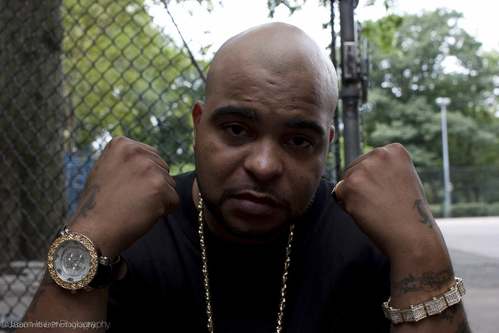
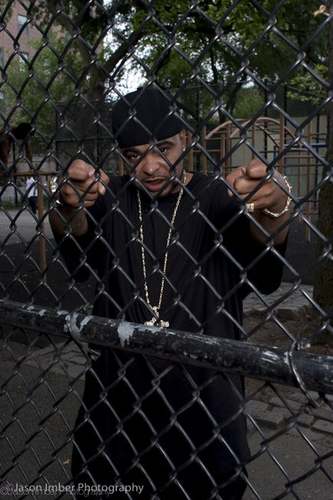
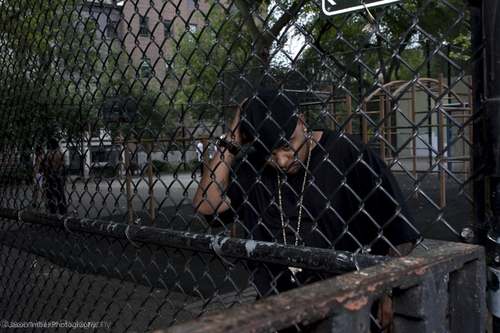
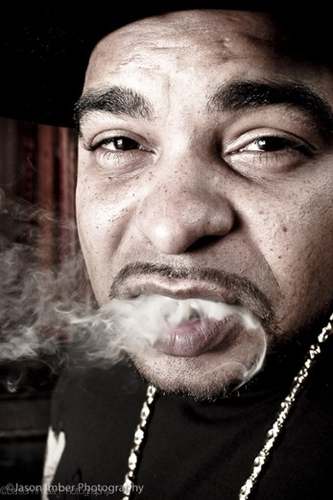
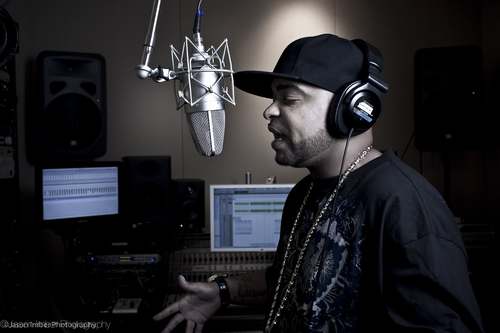
A first sample from The Vault — many more photos from 1999 to present are being added as the archive is restored.
Seal of the King
A Luxury House, Not Merchandise.
Seal of the King is not artist merchandise. It is a luxury apparel house, built by Brandon Hughes to fuse old-world craftsmanship with modern street royalty, Southern identity, and detailed visual storytelling.
The brand's design language is specific and consistent: ostrich-embossed materials, gold wax-seal hardware, Greek key borders, world-map timepiece motifs, broken-heart emblems, and premium presentation boxes built around collection-specific visual identities.
The wax seal itself carries more weight than a logo mark. It represents authenticity. Authority. Lineage. Ownership. Every piece is designed to feel connected to the larger house, rather than existing as an isolated product with a name stamped on it.
The expanding catalog includes apparel, footwear, headwear, bags, sunglasses, accessories, timepieces, jerseys, and outerwear, organized into complete visual worlds rather than loose product drops. Primary collections include the Chevy World — Off-White Box Series (featuring the Phill Jackson Signature Edition), the Chevy World — Black Box Series (carrying Brandon Hughes's own Signature Edition), the Pink Leopard Collection, and the Deep Space Heartbreaker Collection.
Rather than placing the brand inside a generic prebuilt storefront, Brandon commissioned a custom digital home designed to feel like a private label, a showroom, and a luxury lookbook — and secured the domains necessary to control the brand's online identity outright.
The same principle that governs Mazerati Records and King6Tre.com governs Seal of the King: own the design, own the platform, own the presentation, own the customer relationship.
Shop Seal of the King →Innovation Society
A Society of Companies.
Everything before this point in the story is one person's survival and one person's music career.
Everything after it is an argument that the two were never separate — that the same instincts which turned a childhood memory into a triple-platinum record are the instincts now building a technology company, a construction business, a fashion house, and a nonprofit.
Innovation Society is the umbrella that connects Brandon Hughes's ventures across music, film, technology, fashion, construction, healthcare, photography, artificial intelligence, and community development.
It is not a random collection of businesses an entrepreneur happened to start. It is a deliberately vertically integrated ecosystem, built so that each part strengthens the next:
And underneath all of it sits the reason any of this matters beyond profit: the iAm Foundation, which gives the entire ecosystem its purpose.
The philosophy is simple to state and difficult to build: ownership becomes more powerful when businesses can share resources, customers, technology, creative talent, facilities, and opportunity with one another. A film needs a soundtrack. A soundtrack needs distribution. Distribution needs a platform. A platform needs infrastructure. Infrastructure needs people trained to build and maintain it. People need a place to get trained.
Brandon is not building a single company that does many things. He is building a society of companies designed to operate as one.
Hughes Technologies
The Technology Anchor.
At the center of Innovation Society's digital ambitions sits Hughes Technologies — the parent company and intellectual-property holder for the platforms described in this section and the next.
Hughes Technologies develops artificial-intelligence systems, software platforms, websites, digital products, private infrastructure, and specialized business tools built to solve problems Brandon has encountered firsthand.
That firsthand grounding is the entire thesis of the company, and it is worth stating plainly rather than as a marketing line: music production taught him how complex systems of specialists work together toward one outcome. Engineering taught him how to isolate a single problem inside a large system. Filmmaking taught him how to manage multiple departments toward a shared vision. Construction taught him what bad information actually costs, in dollars and in trust. And two decades in the entertainment industry taught him the danger of building anything valuable on top of a platform he does not control.
Hughes Technologies exists to bring those lessons together into products.
Michael AI
Actual Intelligence — the orchestration platform at the center of the ecosystem.
Text/Tool Layer Live · Full Platform In Progress
Directive CRM
Roofing and restoration intelligence — Michael's first proving ground.
Live
StormScope Systems
Atmospheric intelligence built on NOAA / NWS / NEXRAD data.
Live Inside Directive CRM · Standalone In Progress
Faktor Sevinth AI
Practical, creator-facing intelligence for independent entrepreneurs.
In Development
Scriptus Maximus
Authorial intelligence for scriptwriting and story development.
In Development
Care Now
On-demand healthcare and home-care platform.
Designed / In DevelopmentIts current and developing platforms include tools for construction, roofing, weather intelligence, healthcare, content development, artificial intelligence, customer management, and creative production — most visibly Michael AI, Directive CRM, StormScope Systems, Faktor Sevinth AI, Scriptus Maximus, and Care Now.
The long-term goal is for Hughes Technologies to host, protect, and operate its own infrastructure rather than depending permanently on third-party systems it does not own.
The principle is the same one that built Mazerati Records. Ownership.
Michael AI
Actual Intelligence.
Concept still from an early Michael AI presence video — a design frame, not yet the finished production avatar.
Michael was not designed in a laboratory. Michael was designed on a roof.
Brandon Hughes built Michael after running directly into the same problem across several industries where he personally works — construction, restoration, roofing, music, and film. He is not a software developer observing these trades from a distance. He has stood in the driveway. He has priced a job with incomplete information and lost it. He has priced a job with good information and won it. He knows, from direct experience, the difference between an answer that is correct and an answer that merely sounds correct.
That distinction is the entire reason Michael exists.
The producer analogy. Brandon's clearest explanation for what Michael is draws from the studio, not the server room. A producer does not personally sing, engineer, master, and perform every part of a record. A producer assembles specialists — a vocalist, an engineer, a session musician, a mastering house — and directs their combined work toward one finished vision.
Michael applies the same philosophy to intelligence. Rather than depending on a single system to handle every kind of task, Michael is built as an orchestration platform that assigns specialized responsibilities — deep reasoning, natural communication, verification, current information, citation, mathematical logic, and high-volume processing — to the roles best suited for each, then unifies the result under one consistent identity, one name, and one accountability standard.
Why "Actual" and not "Artificial." The phrase is not a claim about consciousness. Michael is not presented as sentient, biologically aware, or a substitute for a human being. It is a product philosophy, built on five practices:
That last point matters most in the fields Michael is built for first: construction, contracts, severe weather, and property research, where a confident wrong answer costs somebody something real.
Where the name comes from. It comes from Hebrew — a rhetorical question meaning "Who is like God?" The intended answer is simple: no one. Brandon chose it because the name already carries an expectation: when the hardest problem needs solving, this is the one that finishes it.
Michael's identity is built around a single consistent presence: a composed young professional in a tailored dark suit, adapting only its context — a hardhat on a job site, a white coat in healthcare, studio headphones in music — without losing the core identity underneath.
What exists right now. Michael's text and tool layer is built and live, exposed through a Model Context Protocol server so that other applications can call Michael's capabilities directly rather than only through one interface. The full visual presence — a complete motion avatar with voice and on-screen states — is still in production. The confidence-rating system that shows a user exactly how much to trust an answer is designed and being built out. None of it is presented here as finished before it is.
Michael's first proving ground is Directive CRM, where the same standards that govern the platform overall are tested against real roofing and restoration work — the exact industry where Brandon can personally tell a real answer from a plausible one.
Directive CRM
Roofing Intelligence.Directive CRM is a roofing and restoration customer-management and property-intelligence platform developed through Hughes Technologies — designed by someone who has run this exact kind of business, not by a software team observing it from outside.
The platform brings together property information, customer tracking, storm research, reporting, lead management, and business tools inside one system, replacing the scattered mess of disconnected applications most contractors are forced to stitch together themselves.
Michael AI is the intelligence layer running underneath Directive CRM. Inside the platform, Michael supports property research, lead scoring, storm intelligence, territory planning, sales guidance, customer follow-up, job assessment, estimating support, and operational decision-making.
One boundary is deliberate and non-negotiable: Michael organizes approved information, guides a workflow, and assembles user-selected templates. Michael does not independently invent binding contractual terms. That distinction is what allows an intelligence system to operate inside a regulated, contract-bearing trade without becoming a liability.
The operational center of the platform is Command Center — the environment where Michael's presence becomes visible rather than hidden inside a corner chat window. Michael occupies a persistent, device-style console within the interface, present the way a specialist on a call is present, moving through states — idle, listening, working, briefing — as a job moves through its stages.
Directive CRM's founding philosophy applies to every product built under Hughes Technologies:
Do not build software because software can be built. Identify a real problem. Understand the people living with it every day. Then build the system that should have existed already.
Faktor Sevinth AI
Practical Intelligence, Independently Available.Faktor Sevinth AI is being developed as the flagship consumer and creator-facing experience within the Hughes Technologies ecosystem.
Rather than positioning artificial intelligence as a novelty or a party trick, Faktor Sevinth is designed around practical use, personalization, and creative collaboration — the same standards Michael AI applies to construction, extended here for independent creators, entrepreneurs, and developing businesses.
The underlying belief is straightforward: advanced technology should not belong exclusively to companies large enough to build their own. Independent musicians, filmmakers, contractors, and small-business owners deserve access to intelligent tools built around what they actually need, not a scaled-down version of something designed for someone else.
Faktor Sevinth AI is in development.
Scriptus Maximus
Authorial Intelligence.Scriptus Maximus is an AI-supported scriptwriting and content-development platform created through Hughes Technologies, connecting Brandon's experience in songwriting, screenwriting, music production, directing, and visual storytelling into one system.
It is built to support the development of scripts, treatments, scenes, characters, and other structured narrative work — not by generating disconnected text, but by understanding structure, continuity, emotional intention, and the long-term shape of a story.
That distinction is the entire point of the platform. A writer does not need a system that produces sentences. A writer needs a system that understands why a scene exists, what it owes to the scene before it, and where a character's voice has to remain consistent three acts later.
Scriptus Maximus is currently in development.
StormScope Systems
Atmospheric Intelligence.Concept broadcast — StormScope severe-weather alert, presented by Michael AI.
StormScope Systems is a weather-intelligence platform built around NOAA, National Weather Service, and NEXRAD data — public, government-sourced information turned into something a contractor can actually act on.
Its purpose connects directly to roofing, restoration, insurance, property management, emergency awareness, and construction operations. StormScope is designed to answer a specific set of questions: where did a storm hit, which properties may have been affected, where did hail occur, and where should a crew go next.
StormScope currently exists as a working module inside Directive CRM, translating raw weather events into operational intelligence a sales or field team can use the same morning. It is also being developed as a standalone, independently licensable product with its own connection point for outside applications.
It works in direct partnership with Directive CRM, Hughes Restoration, and the broader construction division of Innovation Society — the same storm data informing sales intelligence, field operations, and physical repair work from a single source.
Care Now
Attentive Intelligence.Care Now is an on-demand healthcare and home-care platform currently in development, intended to connect individuals and families with responsive care services through a modern digital system.
Care Now represents a different side of the Innovation Society vision — one where technology is not only judged by business efficiency, but by whether it makes someone's life measurably easier at the exact moment they need it.
Healthcare access often breaks down for reasons that have nothing to do with the quality of the care itself: transportation, scheduling conflicts, missing information, or simply not knowing which provider is the right one to call. Care Now is being built around the belief that support should be easier to find in the moment people need it most.
Care Now is currently in development. No specific capabilities beyond this description should be assumed until the platform launches.
Film, Television and The Dream Faktory
The Canvas Expands.

Music gave Brandon his first language for storytelling. Film expanded the canvas it could be told on.
While pursuing a Bachelor of Science in Film — concentrating in Digital Cinematography and Immersive Media — at Full Sail University, Brandon has continued developing his craft as a director, writer, producer, first assistant director, and cinematographer.
His production experience includes work on projects such as Table Talk and X-Men: The Trials of Logan — Logan Endure, where he held leadership roles requiring scheduling, crew management, visual planning, continuity, and — above all — protecting the director's vision through every department that touches it.
Through The Dream Faktory, BTM, and The Film Faktory, Brandon is developing original film, television, music-video, and documentary properties, with a growing slate that includes Chevy World, Project Ball, and Butler Terrace.
His approach to filmmaking is the same approach that has governed every other room he has worked in: respect every department, understand the technical process not just the creative one, protect the emotion, and tell the truth.
He is not interested in producing a polished outsider's version of Southern life for people who have never lived it. He is interested in telling these stories from inside them — which is the only version of these stories he actually has the right to tell.
Chevy World
The Ecosystem in Motion.
Chevy World is the central feature-film project within Brandon's film division, and the clearest working example of how Innovation Society is meant to operate.
The story is rooted in Southern culture, classic automobiles, loyalty, ambition, street economics, family, music, friendship, and betrayal — the realities of trying to build something meaningful in communities where opportunity has always been limited and never handed out.
The project is not one company's work. It is the ecosystem functioning as designed:
Chevy World is not simply a movie Brandon is making. It is proof of concept for the entire Innovation Society structure — the moment where music, film, fashion, and technology stop being separate divisions on an org chart and start functioning as one production.
Hear the Chevy World soundtrack →The Fashion Houses
Three Houses, One Family.Seal of the King is the flagship, but the fashion division extends into two additional lines: Heart of the Queen, a women's luxury fashion line, and Heir to the Throne, a luxury children's clothing line.
Together, the three brands form a complete family of fashion houses built around identity, heritage, royalty, and visual storytelling.
They are not extensions of an artist's name licensed onto product. Each is being developed as an independent brand with its own audience, its own products, its own design language, and its own long-term future.

Seal of the King
Men's luxury house
Heart of the Queen
Women's luxury line
Heir to the Throne
Luxury children's lineThe Illustrator and Empire Frame Company
Visual Ownership.

Through The Illustrator, Brandon develops graphic design, branding, visual campaigns, logos, cover art, product imagery, and creative direction — supporting projects across Innovation Society while operating as its own venture.
Empire Frame Company extends that visual mission into premium photography and photographic presentation.
Together, these two ventures control how Brandon's companies, artists, products, films, and historical archive are actually seen by the public.
In an industry where presentation often determines whether anyone stops long enough to discover the substance underneath it, visual ownership is not a cosmetic concern. It is a business decision — the same category of decision that produced Mazerati Records and King6Tre.com, applied to imagery instead of masters.
Construction and Development
Building It in the Real World.

Innovation Society is not limited to entertainment or digital products.
Through Hughes Restoration and Hughes Custom Home Builders, Brandon's work extends into construction, repair, property improvement, and custom development — grounded in years of hands-on professional experience, not a side investment managed from a distance.
These businesses connect directly to the larger vision. The future of Innovation Society will require studios, offices, homes, campuses, production spaces, healthcare environments, technology centers, and facilities for education and community development — including the iAm Campus itself.
Brandon does not want to depend entirely on outside companies to build the physical spaces behind his ideas.
Just as Hughes Technologies builds the digital systems the ecosystem runs on, the construction division exists to build the real-world spaces where the actual work happens.
The iAm Foundation
Intervention Through Athletics & Music.
Every company, record, film, product, and technology platform in this biography exists in service of one purpose. That purpose is the iAm Foundation.
iAm stands for Intervention Through Athletics & Music, and it was created directly from Brandon's own experience inside Alabama's juvenile institutions and the adult prison system.
He understands, from the inside, what it feels like to be labeled a problem before anyone bothers to look for the gift underneath the behavior. He understands what it feels like to be removed instead of counseled, sent away instead of introduced to an opportunity that might have changed everything.
He also understands, because he lived it, what happens when talent finally meets direction.
Music took Brandon from a cell in Alabama to Warner Bros. Records, to an Emmy, to Billboard, to international stages, to Grammy-recognized work, to a career now past twenty-five years and a growing list of companies built on the other side of it.
But he did not find that talent because the juvenile justice system helped him. He found it while surviving the system — not because of it.
iAm exists to provide the intervention he never received.
The foundation's mission reaches across athletics, music, film, technology, art, education, mentorship, counseling, and career development — a deliberately wide net, because the goal was never to produce more athletes or more rappers.
The goal is to reach children before the justice system gets the chance to permanently define them.
He knows what it means to carry trauma with no language to explain it. He knows what it means to act out and be punished before anyone asks what happened first. He knows what it means to move from a juvenile facility into an adult prison and recognize half the room.
That is why iAm cannot sit at the bottom of a page as an afterthought, and why it does not, throughout this biography. It is why the record label, the film companies, the fashion houses, the construction companies, and the technology platforms are not separate from the mission.
They are the mission's infrastructure.
The iAm Campus
Huntsville, Alabama.The planned iAm Campus is being developed in Huntsville, Alabama, as a center for juvenile justice reform built through athletics, music, film, technology, art, education, mentorship, counseling, and career development.
The foundation's mission is to reach children before the criminal justice system permanently defines them — the same window Brandon fell through at eleven years old, with nobody positioned to catch him.
Athletics will teach discipline, teamwork, accountability, physical wellness, determination, leadership, and hope.
Music will teach songwriting, instrumentation, music theory, recording, audio engineering, production, mixing, mastering, performance, branding, artist development, and the music business — the exact curriculum Brandon built for himself the hard way, on a prison yard and then in a series of studios, with no one teaching him any of it in order.
Film and media will introduce students to cinematography, screenwriting, directing, photography, editing, graphic design, lighting, production management, and digital media.
Technology will introduce students to artificial intelligence, software development, application design, web development, data systems, digital infrastructure, and technology entrepreneurship.
Construction and career development will create pathways into skilled trades, property restoration, custom home building, studio construction, and real-world employment.
None of this is designed to manufacture rappers, athletes, or entertainers on a fixed track. It is designed to create options — the thing Brandon did not have.
A child who might otherwise become a career offender can instead become an engineer, a producer, a contractor, a developer, a filmmaker, a designer, a healthcare professional, a coach, a musician, an entrepreneur, or a community leader.
The campus is the physical proof that the ecosystem described throughout this biography was never just a collection of businesses. It was always the training ground.
A Family Legacy
Education, Athletics, and Service.The iAm mission continues a legacy that started well before Brandon was born.
His grandmother dedicated approximately forty years to education. His mother served as an educator for approximately forty-five years. His father was a college football player, an All-American athlete, and a decorated military serviceman. His uncle, the legendary Coach Arthur C. Hughes, spent more than forty years teaching and coaching throughout the Fayette school system.
Education. Athletics. Discipline. Creativity. Service. These were not values Brandon adopted later in life to justify a nonprofit. They were already the foundation of the family he grew up in — running alongside, and often in direct tension with, the institutional failures that also shaped his childhood.
Through iAm, Brandon carries that legacy into a new generation, while confronting head-on the broken systems that shaped his own early life.
The goal is not merely to criticize the juvenile justice system that failed him. It is to build something capable of replacing it.
The Reason the Empire Matters
iAm Is Not Separate From the Empire.Every company described in this biography can do more than generate revenue. Each one is a potential classroom, internship, mentorship, or career pipeline for a young person who needs exactly one of those things at exactly the right moment.
Taken together, the entire ecosystem becomes something no single nonprofit could build on its own: a network of classrooms, internships, jobs, mentors, and second chances, embedded directly inside working businesses instead of sitting beside them.
Every company in this biography was built by a man who once needed exactly what these companies are now positioned to provide, and had nobody positioned to provide it.
The Next Chapter
King 6Tre's life has never followed a clean or predictable path.
He has lived through juvenile incarceration, adult prison, a major-label agreement, a corporate merger that ended it, Emmy recognition, Grammy-recognized work, Dove Award recognition, Billboard success, international performances, industry politics, delayed recognition, family responsibility, independent entrepreneurship, and repeated reinvention — often in that order, and sometimes all at once.
Every setback expanded what came next.
The prison sentence produced more than a thousand songs. The Warner Bros. restructuring produced Dark House Music Group. The limitations of traditional labels produced Mazerati Records. The weaknesses of outside platforms produced King6Tre.com. The loss of historical control produced The Vault. The absence of specialized business software produced Hughes Technologies, Michael AI, and Directive CRM. The lack of fashion that reflected his identity produced Seal of the King. The shortage of authentic Southern stories produced The Film Faktory. The failure of the juvenile justice system produced iAm.
That pattern is why King 6Tre cannot be reduced to a rapper, a producer, a founder, or a survivor. He is all of those at once, and the throughline connecting them is not talent.
It is refusal — the refusal to let any single failure be the last word.
His focus now: releasing and preserving the full music catalog, completing King6Tre.com, expanding Mazerati Records' independent distribution network, developing Innovation Society, growing Hughes Technologies and Michael AI, producing Chevy World and the rest of the film slate, expanding Seal of the King into an international luxury house, and building the iAm Campus in Huntsville.
The mission is no longer simply to succeed. It is to build systems where success can be reproduced for someone else.
Brandon believes Alabama has never lacked talent. It has lacked infrastructure, access, ownership, professional development, investment, and people willing to stay long enough to build something that lasts.
His work now exists to change that.
King 6Tre is not trying to become a legend. He has already lived the story.
Now he is preserving it, expanding it, and making sure the world finally sees the full picture — the incarceration alongside the Grammy-recognized work, the trunk sales alongside the technology company, the failed juvenile system alongside the campus being built to replace it.
He is documenting the history. Protecting the catalog. Building the companies. Creating the technology. Producing the films. Designing the products. Developing the infrastructure.
And using everything he survived to build a road for the children coming behind him.
King 6Tre is not becoming a legend. He is documenting one — and building the infrastructure to make sure the next generation survives long enough to write its own.